Blog
IV therapy and health, explained
Articles on IV therapy, vitamins and your health. Science, not marketing. English translations of articles medically reviewed in Romanian.

The scales have not moved for a few weeks and your first reaction is to think the treatment does not work for you. Most of the time the explanation is something else, and several of the possibilities can be checked at home in five minutes. What the studies show about the real pace of weight loss, and what exactly is worth discussing with the doctor who prescribed your treatment.
Read the article →

In the first months, the feeling of fullness comes much earlier and thirst often goes unnoticed. Fluid intake drops without anyone deciding it. How much you actually need, how to tell that you are not managing, what works at home and, at the end, when medical support makes sense.
Read the article →
"Weight-loss injections" is the popular name for a class of prescription medicines. What they actually are, how they act, how much weight is lost in the clinical trials, which side effects are common, who is not a candidate and which questions are worth asking at the consultation.
Read the article →
Most side effects are digestive, appear at the start and ease. A few, however, are not something to wait out. What the approved documents report by frequency, what each category means in practice and which signs call for immediate contact with the doctor.
Read the article →
"Mounjaro opinions" is one of the most searched phrases in this area, and what you find is almost entirely individual experiences. We have set what is discussed on forums side by side with what the approved product document says — including where the two contradict each other.
Read the article →
The question is usually asked too late, and the answer changes the way you look at the whole treatment. What withdrawal studies show about the weight regained, how quickly and why it happens — with the published figures, not impressions.
Read the article →
Not everyone who wants to lose weight is a candidate. What the approved documents list as absolute contraindications, what falls under special warnings, the practical difference between the two and why neither can be self-assessed.
Read the article →
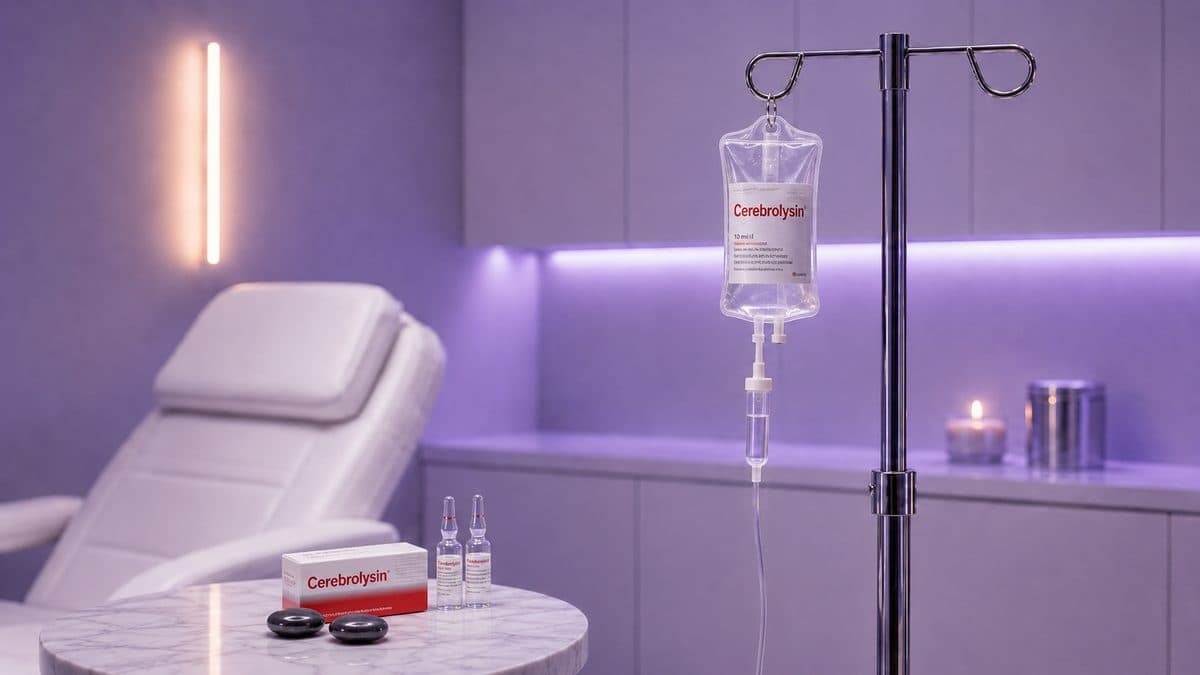
A medicine's leaflet is written for the doctor, not the patient. We translate the part that matters: what an ampoule contains, which dose is given for which indication, why anything above 10 ml is given only as a diluted infusion, and what must not be mixed into the infusion bag.
Read the article →
At Synerva, a session costs 300 RON and includes the medical consultation, the 10 ml ampoule, the infusion and monitoring. What that means for a 10–20-day course, and what needs settling before you book.
Read the article →
On forums you will find both “it changed my life” and “I felt nothing”. Both are sincere and neither is evidence. What the systematic reviews say instead, including where the result is disappointing.
Read the article →

Glutathione is a real molecule, with a real role. The problem is the gap between what it does in the cell and what is attributed to it on the internet. We put the two side by side — including the part that works against us.
Read the article →
Anyone searching for "glutathione ampoules" quickly lands on TAD 600. We explain what the product contains, which indications the manufacturer attributes to it and where it is actually sold in Romania — because the answer to the last question matters more than the first two.
Read the article →
Plain oral glutathione is broken down before it gets where it needs to go. The liposomal form tries to solve exactly that, and the IV drip bypasses the problem altogether. Which makes sense for whom — and where, honestly, the evidence stops.
Read the article →

NAD+ is one of the best-understood molecules in biochemistry and one of the worst-explained in marketing. What it really does, why it declines with age and what has not yet been shown in humans.
Read the article →
The most useful thing you can learn before buying a "NAD+" supplement: it almost certainly does not contain NAD+. What the products people search for in Romania really contain, the legal status of their ingredients in the EU and when the intravenous route makes sense.
Read the article →
On the shelves you will find both NAD+ and NADH, presented as rival products. In reality they are the same molecule in two states. What this means for what you buy and what you should know first.
Read the article →
Prices for injectable NAD+ vary a lot, and the differences are not arbitrary. What exactly you are paying for, why the 250 mg dose costs more than twice the 100 mg dose and what should put you on guard with a very cheap offer.
Read the article →

You have your lab results and serum iron is outside the range. Before drawing a conclusion: serum iron fluctuates from day to day and does not tell you on its own whether you are iron deficient. What a doctor actually looks at, and when intravenous administration comes into the picture.
Read the article →

Vitamin C ampoules are searched for more than 1,900 times a month in Romania. What they contain, why oral absorption has a physical limit that even the highest tablet dose cannot exceed, and when the intravenous route makes sense.
Read the article →

It is searched for in pharmacies, by brand name and by dose. Which injectable forms exist, what the difference is between 100,000 and 300,000 IU, and why the right question is not "where can I find it?" but "do I need it?".
Read the article →

Magnesium sulphate ampoules are searched for hundreds of times a month in Romania. What they contain, why they are never given undiluted, and why with magnesium the question about your kidneys comes before the one about benefits.
Read the article →

Fluimucil and ACC are acetylcysteine, i.e. NAC. What the ampoules contain, what the SmPC says about the intravenous route, how the same substance is used as an antidote in hospital, and why a NAC IV drip is not a treatment for a cough.
Read the article →

Gerovital H3 injection is given only intramuscularly, after a procaine sensitivity test. The schedule the leaflet describes, why injecting it into a blood vessel is contraindicated, and what the evidence honestly shows.
Read the article →
Dibase is high-dose injectable vitamin D3, searched for by name and by pharmacy. What it contains, what the manufacturer's leaflet says, what we found in the ANM register, and why a 100,000 IU dose is decided on the basis of a blood test, not the leaflet.
Read the article →

"B1 B6 B12 injection intravenous" has an answer that differs from one ampoule to another. What the SmPCs of the pharmacy products say, what risks each vitamin carries, and what the vitamin B complex drip and the B12 injection cost at the clinic.
Read the article →

The price of a vitamin IV drip varies more than twofold between protocols. What drives it — composition, dose, duration, place — our real prices, how to read a course, and what you do not buy by paying more.
Read the article →
Zinc and selenium are real trace elements with real roles — and with a risk of excess that a supplement label does not show. Why injectable administration requires a confirmed deficiency, how narrow the margin is for selenium, and what studies say about zinc and colds.
Read the article →

Resveratrol looks good in the laboratory and in animals. In humans, studies are few, small and almost all oral, and clinical data on intravenous use are missing. What is known for sure, what is not, and the part that matters most: interactions.
Read the article →

Alpha-lipoic acid has a single absolute contraindication in the leaflet for the injectable form, but several precautions that really matter: hypoglycaemia in people taking diabetes medicines, a rare autoimmune syndrome and reactions to the infusion. Plus what the ALADIN and SYDNEY trials say — and for whom.
Read the article →

The same name covers two very different things: feeding a patient who cannot eat through a vein, and an IV drip for general wellbeing. What is known about each, who should not receive them and why the difference matters.
Read the article →
Almost anything is sold as "vitamin therapy", from a multivitamin to an hour-long IV drip. What the term means, in which situations it has a clear medical basis and why, for most deficiencies, the tablet remains the first option.
Read the article →
You lose words, struggle to concentrate, think "through cotton wool". "Brain fog" is not a diagnosis, but it often has causes that can be found. What gets checked, in what order, with whom — and why the first step is not a supplement or an IV drip.
Read the article →

Burnout is not fixed by an IV drip, however good that sounds. What it is according to the World Health Organization, what studies show helps, what an IV drip can realistically do, and the signs that call for a doctor or a psychologist, not an IV therapy clinic.
Read the article →

The best-known vitamin drip has a bigger reputation than the evidence behind it. What the formula described in the literature contains, what the randomised placebo-controlled trial found, and which protocols in our catalogue are similar in composition — without calling them “Myers”.
Read the article →

All three are needed for the immune system to work normally, and a deficiency matters. In people without a deficiency, however, supplementation has much smaller effects than the advertising suggests. What the large analyses show, when a deficiency should be confirmed and what an infusion can realistically do.
Read the article →
B vitamins and magnesium play real roles in energy metabolism, but persistent fatigue most often comes from sleep, stress or depression, and sometimes from anaemia or a thyroid problem. What is checked first, what these nutrients do and when injectable administration makes sense.
Read the article →
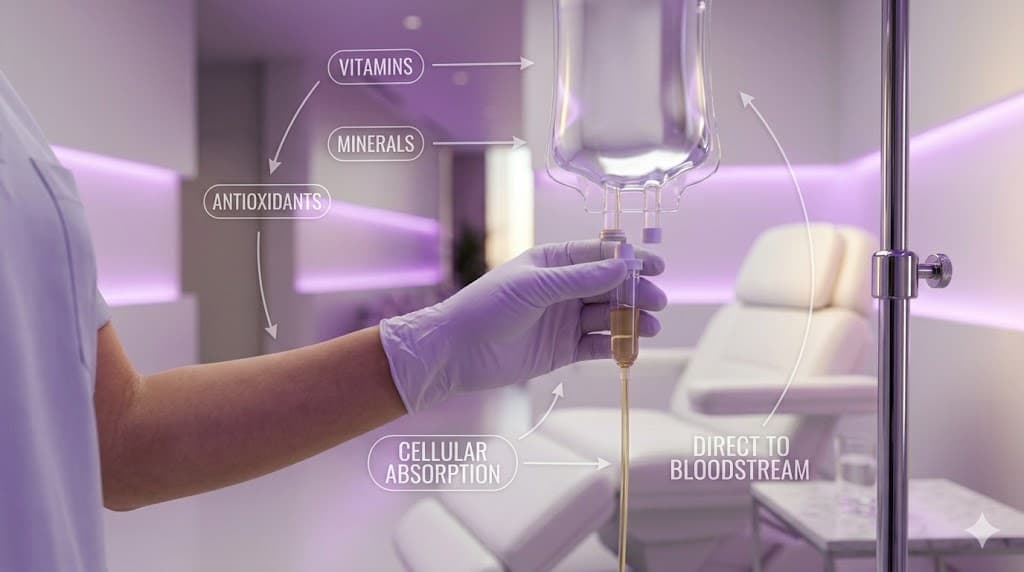
Intravenous therapy is one of the most routine procedures in hospital, but wellness vitamin drips are a different use, with weaker evidence and the same procedural risks. How a session works, what complications can occur and who needs to be careful.
Read the article →
It depends what for. Injectable vitamins are standard treatment in some deficiencies and absorption disorders, but for energy or immunity in healthy people the evidence is weak. What the studies show, how much placebo matters and what questions to ask a clinic before you pay.
Read the article →

A hangover is not just dehydration: acetaldehyde, inflammation and fragmented sleep all play a part. What the studies show about remedies (very little), what the myths are, the signs of alcohol poisoning that need 112, and what a rehydration drip can — and cannot — do.
Read the article →
There is no frequency that suits everyone. The pace depends on the goal and, for vitamins that accumulate or for iron, on a confirmed deficiency. The documented risks of “more often”, what the studies show about repeated infusions and how courses are put together.
Read the article →
What happens from booking until the nurse leaves with the medical waste, what you need to prepare at home, which protocols are not given at home and why, what the travel fee is and where we go in Bucharest and Ilfov.
Read the article →

For most dehydration, the oral rehydration solution recommended by the WHO works. When the intravenous route makes sense, what the studies in athletes show, the signs that need emergency care and why heart and kidney conditions change the conversation.
Read the article →
Magnesium is among the most popular supplements for sleep and stress. The studies are few, small and have mixed results. What the reviews found, which foods provide it, when the oral route is enough and in what contexts intravenous administration makes sense.
Read the article →
Cerebrolysin is a prescription medicine, not a supplement and not a “memory booster”. What an ampoule contains, its licensed indications, why doses above 10 ml are given only as a diluted infusion, and what the Cochrane reviews found — including the uncomfortable part.
Read the article →

NMN has become the most searched-for molecule in the longevity space. What it actually is, how it relates to NAD+, what human studies show — few and small — and why the route of administration changes the discussion. No hype, sources in plain view.
Read the article →
Intravenous iron is not a wellness protocol but a treatment based on blood tests. What ferritin, serum iron and the full blood count show, why C-reactive protein matters, how it is given safely and why the effect on anaemia appears only after two weeks.
Read the article →
What injectable glutathione is, how it differs from the oral form, which benefits are supported by evidence, what people who have tried it say and in which situations it is not indicated.
Read the article →

NAC (N-acetylcysteine) is the precursor of glutathione, the body's main antioxidant. What each one does, how they differ and when a glutathione IV drip makes sense.
Read the article →
Detox is a word used everywhere — but what can an IV drip do, and what can it NOT do? How the body detoxifies itself, where glutathione and NAC help, and where it is just marketing.
Read the article →