The truth about glutathione — what is proven, what isn't, and what the authorities have warned about
Glutathione is a real molecule, with a real role. The problem is the gap between what it does in the cell and what is attributed to it on the internet. We put the two side by side — including the part that works against us.
English translation of content medically reviewed in Romanian by Dr. Claudiu Ruscu, intensive care physician (anaesthesia & intensive care)· Romanian text reviewed 13 September 2026
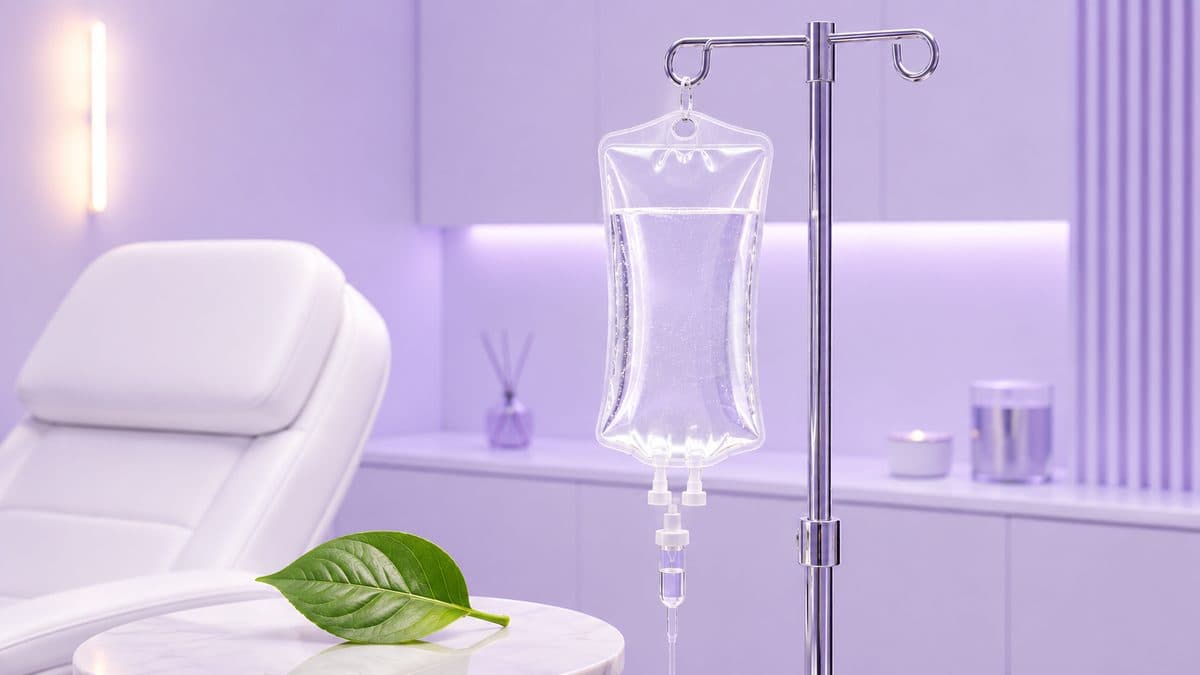
Glutathione is among the most searched-for substances in the wellness space in Romania, and among those about which the most unverified things are written. This article separates what is known from what is hoped for.
What it is, without the marketing
A tripeptide made up of glutamic acid, cysteine and glycine, produced by the body and present in almost all cells. Its recognised role:
- it is the main antioxidant inside the cell — it neutralises reactive oxygen species;
- it takes part in liver detoxification, in the second phase of metabolism, where it helps conjugate certain substances for elimination;
- it is involved in recycling other antioxidants, including vitamin C and vitamin E.
All of this is established biochemistry. It is not in question.
"The most powerful antioxidant": what it means, biochemically
The phrase appears on almost every page about glutathione — "the most powerful antioxidant", "the ultimate antioxidant", "master antioxidant". It is worth taking apart, because part of it is true and part of it is just rhetoric.
The true part. The specialist literature describes glutathione as the most abundant non-protein thiol in mammalian tissues and the most abundant antioxidant produced by the body. It works in two main ways:- it neutralises oxidants by reduction — the reduced form (GSH) gives up electrons and becomes the oxidised form (GSSG);
- it binds to toxic electrophilic substances (conjugation), which can then be eliminated.
The ratio between the oxidised and the reduced form is used in studies as a marker of oxidative stress: a fall in the proportion of GSSG is interpreted as a reduction in oxidative stress.
The part that is just rhetoric. "The most abundant" and "a central role" do not mean "the most powerful" in any sense that matters to you. What the literature describes is abundance and position in the antioxidant network, not a ranking of power according to which extra glutathione would do more good than anything else. And a detail that changes the perspective. The body produces its own glutathione, in the cytoplasm of cells, in a tightly regulated way. The factors that determine how much is produced are the availability of cysteine — the sulphur-containing amino acid in its structure — and the activity of a rate-limiting enzyme, glutamate-cysteine ligase. In other words, the level of glutathione in the cell is not a passive reservoir that you fill from outside, but a variable that the body actively controls. This is also where the interest in N-acetylcysteine, which supplies cysteine, comes from: NAC or glutathione.Where the gap begins
The fact that a molecule has a role in the cell does not automatically mean that giving extra of it produces a measurable benefit in a healthy person. Between "takes part in liver detoxification" and "detoxifies your liver" lies exactly the distance that marketing covers without mentioning it.
What can honestly be said about supplementary administration:
- Blood levels rise after intravenous administration. This is measured and clear.
- What happens next — whether the rise translates into clinical effects in a person without a specific condition — is much less clear.
- There are medical contexts in which glutathione is studied seriously: chemotherapy-induced neuropathy, some liver conditions, Parkinson's disease. These are clinical situations, with diagnosed patients.
Why an important antioxidant does not automatically become a useful supplement
The idea that "if it's an antioxidant, more is better" has been tested on a large scale — not with glutathione, but with the classic antioxidants. A 2012 Cochrane review brought together 78 randomised trials, with almost 300,000 participants, in which beta-carotene, vitamin A, vitamin C, vitamin E and selenium were given. The authors' conclusion: they found no evidence to support antioxidant supplements for prevention, and beta-carotene and vitamin E even appeared to increase mortality.
Glutathione was not included in that review, so the conclusion does not apply to it directly. But the methodological lesson does: a real biological role does not guarantee an effect from supplementation. That has to be demonstrated separately, for each substance.
What studies done with glutathione itself have shown
When you look at the direct studies, the picture is more nuanced than "it works" or "it doesn't work":
| What was tested | What was found |
|---|---|
| Oral glutathione, single dose of 3 g, 7 healthy volunteers | plasma glutathione did not rise significantly in the following hours |
| Oral glutathione, 1 g a day, 4 weeks, 40 healthy adults | no effect on markers of oxidative stress or on glutathione levels |
| Oral glutathione, 250 or 1,000 mg a day, 6 months, 54 adults | glutathione stores increased, depending on dose and time, and returned to baseline after a one-month break |
| Intravenous glutathione, 1,400 mg three times a week, 4 weeks, 21 patients with Parkinson's disease | well tolerated, but no significant differences from placebo on the symptom scale |
And in chemotherapy-induced neuropathy — one of the indications for which injectable glutathione appears in manufacturers' materials — the guideline of the American Society of Clinical Oncology, updated in 2020, reconfirmed that no agent is recommended for prevention.
In short: glutathione can be raised in the body by certain routes, and intravenous administration was well tolerated in small studies. What is missing is proof of a clinical benefit in healthy people.
What is established, what is uncertain, what is unproven
| The claim | Where the evidence stands |
|---|---|
| Glutathione is an essential intracellular antioxidant | established, biochemistry |
| Blood levels rise after intravenous administration | established, it is measured |
| Oral glutathione increases the body's stores | contradictory: not after single doses or a few weeks, yes in one 6-month study |
| The IV drip brings a clinical benefit to a healthy person | unproven |
| Intravenous glutathione whitens the skin, safely | no adequate evidence, with safety warnings from the authorities |
| It "cleanses" the body of toxins | unproven in the sense in which it is promised |
The uncomfortable part: skin whitening
Here something has to be said that is not in our commercial interest.
The most popular use of intravenous glutathione worldwide is not detoxification — it is skin whitening. And on this use, the authorities have issued explicit warnings:
- In April 2018, the US authority published a warning that injectable skin-whitening products may be unsafe, based on the lack of safety evidence and on the fact that this use is not approved.
- In February 2019, the same authority reported seven patients with adverse reactions after improperly prepared injectable glutathione, caused by high levels of endotoxins.
- The authority in the Philippines, a country where the practice is widespread, issued a dedicated advisory on the unsafe use of glutathione as a whitening agent.
Specialist reviews point in the same direction: published clinical studies on injectable glutathione for skin whitening are very few and do not show a demonstrated effect, and the risks mentioned include anaphylactic reactions, liver damage and a lack of standardised dosing protocols.
We do not give glutathione for skin whitening and we do not present it as a cosmetic treatment.What this means in practice
Glutathione is not a con and it is not a miracle. It is a molecule with a real role, with studied medical uses, and with a halo of promises that have no backing.
The right questions, if you are considering an IV drip:
How we work
We give intravenous glutathione, 600 or 1200 mg, at the clinic or at home, after a medical assessment, within our "detox and cellular protection" protocol category. We do not promise skin whitening, rejuvenation or the elimination of toxins.
In concrete terms: Glutathione 600 mg takes about 30 minutes and costs 250 RON; Glutathione 1200 mg takes about 45 minutes and costs 400 RON. For a series there are courses of 4 sessions: 750 RON for 600 mg, 1,200 RON for 1200 mg. The medical assessment is included, and the number of sessions is discussed at the assessment — there is no "proven" number of sessions for a healthy person.
The comparison with oral forms: liposomal or injectable glutathione. What's going on with the ampoules sold in online shops: TAD 600 and glutathione in ampoules. The protocol and prices: injectable glutathione.
Sources
An informative article. It does not replace a medical consultation; any intravenous administration is decided by a doctor, after an assessment.
Frequently asked questions
- What does glutathione do in the body?
- It is the main antioxidant inside the cell, takes part in the second phase of liver detoxification and helps recycle other antioxidants, including vitamin C and vitamin E. These are established biochemical roles.
- Does glutathione whiten the skin?
- It is the most popular use of intravenous glutathione worldwide, but published clinical studies are very few and do not show a demonstrated effect, and the authorities in the United States and the Philippines have issued warnings about the safety of injectable skin-whitening products. We do not give it for this purpose.
- Does intravenous glutathione have side effects?
- The risks mentioned in the literature include hypersensitivity reactions up to anaphylaxis, liver damage and a lack of standardised dosing protocols. There is also a risk linked to preparation — in 2019, seven patients were reported with adverse reactions caused by endotoxins in an improperly prepared product.
- Does glutathione really detoxify?
- It takes part in liver detoxification at the biochemical level — that is established. That extra glutathione "detoxifies the body" of a healthy person in a measurable way is a different claim, which does not have the same backing.
- Who does a glutathione IV drip make sense for?
- That is established at the medical assessment. If the reason is a general state, without a specific problem, the right conversation starts with the assessment, not with choosing a protocol.
- Is glutathione the most powerful antioxidant?
- It is the most abundant antioxidant produced by the body and has a central role in the cell's defence: it reduces oxidants and binds to toxic substances so they can be eliminated. "The most powerful", however, is a marketing formula. Abundance and a central role do not mean that extra glutathione does more good than anything else.
- Why doesn't an important antioxidant automatically help as a supplement?
- Because the effect of supplementation has to be demonstrated separately. A Cochrane review of 78 randomised trials of the classic antioxidants — beta-carotene, vitamins A, C and E, and selenium — found no evidence that they help in prevention, and some appeared to increase mortality. Glutathione was not included, but the lesson is the same: a biological role does not guarantee a benefit.
- Does glutathione taken by mouth raise levels in the body?
- The results are contradictory. A single dose of 3 g did not raise plasma glutathione, and 1 g a day for 4 weeks changed neither the level nor the markers of oxidative stress. In a 6-month study, on the other hand, stores increased, but returned to baseline after a one-month break.
More in Science
- NADH and NAD+ — the difference, the claimed benefits and the contraindications
On the shelves you will find both NAD+ and NADH, presented as rival products. In reality they are the same molecule in two states. What this means for what you buy and what you should know first.
- Fatigue, B vitamins and magnesium: what to check before an IV drip
B vitamins and magnesium play real roles in energy metabolism, but persistent fatigue most often comes from sleep, stress or depression, and sometimes from anaemia or a thyroid problem. What is checked first, what these nutrients do and when injectable administration makes sense.
- Magnesium, stress and sleep: what the studies show, when oral is enough and when it is not
Magnesium is among the most popular supplements for sleep and stress. The studies are few, small and have mixed results. What the reviews found, which foods provide it, when the oral route is enough and in what contexts intravenous administration makes sense.
- Cerebrolysin: divided opinions — and what independent studies actually show
On forums you will find both “it changed my life” and “I felt nothing”. Both are sincere and neither is evidence. What the systematic reviews say instead, including where the result is disappointing.
SYNERVA services related to this article
Thinking of trying it?
We start with a medical assessment — we tell you which protocol makes sense for you and which doesn't. Published prices, no surprises.
Book an assessment