Injectable glutathione: benefits, reviews and contraindications (medical guide)
What injectable glutathione is, how it differs from the oral form, which benefits are supported by evidence, what people who have tried it say and in which situations it is not indicated.
English translation of content medically reviewed in Romanian by Dr. Claudiu Ruscu, intensive care physician (anaesthesia & intensive care)· Romanian text reviewed 29 July 2026
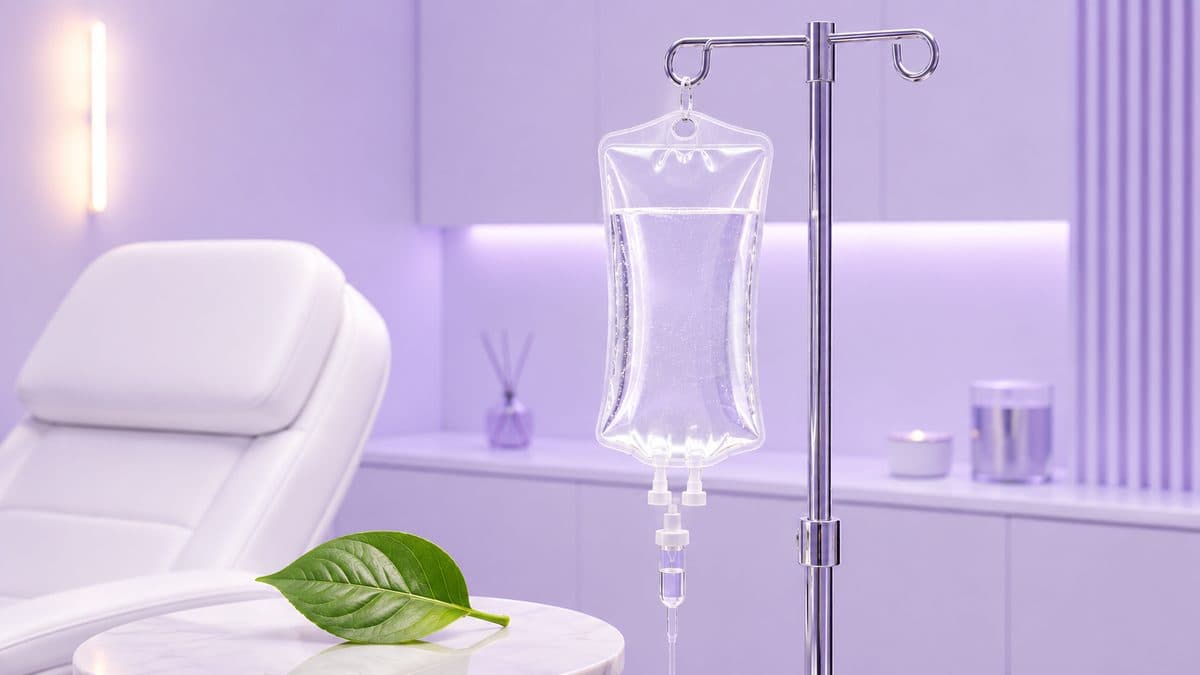
Injectable glutathione is searched for a lot, but the information online is split between adverts and forums. This guide brings together what is known: what glutathione does, why the injectable route differs from the oral one, what people who have tried it say and — more importantly — when it is not indicated.
What glutathione is
Glutathione is a tripeptide produced naturally by the liver, made of three amino acids: cysteine, glycine and glutamic acid. It is considered the main intracellular antioxidant — it takes part in neutralising free radicals and in the processes by which the body handles substances it wants to get rid of.
It is not a miracle drug and it does not treat any particular disease. It is a molecule the body makes on its own, whose level can fall with age, with oxidative stress or in certain conditions.
Injectable vs oral: why the route matters
This is the main practical difference, and it is an argument about bioavailability, not about guaranteed efficacy.
Glutathione taken by mouth is largely broken down in the digestive tract before it reaches the circulation. That is why oral glutathione supplements are poorly absorbed, and some manufacturers recommend precursors such as NAC instead — see the detailed comparison in NAC and glutathione.
Glutathione given intravenously bypasses digestion and goes straight into the bloodstream. That means a higher plasma concentration, more quickly. What it does not mean: that the effects you feel are automatically greater or guaranteed.
> Better bioavailability is a measurable fact. The clinical benefit you feel is individual and depends on context, not on the route of administration itself.
Which benefits are discussed
The reasons people choose a glutathione drip, as they are usually put:
- Antioxidant support — the molecule's main, documented role.
- Liver support — the liver is the organ where glutathione is produced and heavily used.
- Skin appearance — the most searched-for reason online and, at the same time, the most oversold. See the section below.
- Recovery after exertion or demanding periods — as part of a broader protocol, not as a stand-alone solution.
What you will not find here: promises of cure, “complete” detoxification or guaranteed results. The body has its own elimination mechanisms, and a drip supports them — it does not replace them. We have covered separately what a drip can and cannot do in detox: myths and reality.
About the effect on skin — the honest part
Most searches for “injectable glutathione” come from the aesthetic side, where the molecule is promoted for lightening skin tone. Precision is needed here:
The depigmenting effect has been studied, but the evidence is limited in the number and size of studies, and results vary widely from person to person. There is no medical consensus supporting injectable glutathione as a skin-whitening treatment, and several regulators have issued warnings about its use for this purpose, especially at high doses and without supervision.
If this is the main reason you are looking into it, an honest conversation with a doctor is more useful than any article.
What people who have tried it say
Opinions shared publicly generally fall into three groups:
Opinions are personal accounts, not clinical evidence. We mention them because they are exactly what people look for — but a medical decision is not made on their basis.
How a glutathione drip goes
A short medical assessment, placing the IV line, the administration itself — usually 15–20 minutes for the standard protocols — and a short observation period. It is not a painful procedure; the sensation is that of a prick when the cannula goes in.
Contraindications and when it is NOT indicated
This is the part missing from most articles on the subject.
- Pregnancy and breastfeeding — it is not given.
- Asthma — reactions to sulphur compounds have been reported; careful assessment is needed.
- Known allergy to glutathione or to the components of the solution.
- Severe kidney or liver disease — requires a prior medical assessment and, often, postponement.
- Active cancer treatment — glutathione may interfere with certain therapies; the decision belongs to the treating doctor, not the IV drip clinic.
- Children and adolescents — not a routine indication.
The list is not exhaustive. That is why a medical assessment before administration is not a formality, but a condition.
How much it costs
At SYNERVA, the glutathione IV drip is available in two strengths: 600 mg — 250 RON and Glutathione 1200 mg — 400 RON, with the medical assessment included in the price. There is also the combined Glutathione + vitamin C, at 450 RON. Prices are published in full, with no costs added later.
Conclusion
Injectable glutathione has real logic behind it — better bioavailability than the oral form and a documented antioxidant role. It does not, however, have the treatment status some online promotion attributes to it, and for the aesthetic indication the evidence remains limited.
If you are interested, the right step is a medical assessment: we will tell you whether it makes sense in your situation and, just as importantly, when it does not.
More in Guides
- NAC and glutathione: what they are, how they are linked and when a drip makes sense
NAC (N-acetylcysteine) is the precursor of glutathione, the body's main antioxidant. What each one does, how they differ and when a glutathione IV drip makes sense.
- Detox: what it really means and what an IV drip can do
Detox is a word used everywhere — but what can an IV drip do, and what can it NOT do? How the body detoxifies itself, where glutathione and NAC help, and where it is just marketing.
- Cerebrolysin: what it is, how it is given and what the studies actually show
Cerebrolysin is a prescription medicine, not a supplement and not a “memory booster”. What an ampoule contains, its licensed indications, why doses above 10 ml are given only as a diluted infusion, and what the Cochrane reviews found — including the uncomfortable part.
- Cerebrolysin — the leaflet in plain English: dosage, dilution, administration
A medicine's leaflet is written for the doctor, not the patient. We translate the part that matters: what an ampoule contains, which dose is given for which indication, why anything above 10 ml is given only as a diluted infusion, and what must not be mixed into the infusion bag.
SYNERVA services related to this article
Thinking of trying it?
We start with a medical assessment — we tell you which protocol makes sense for you and which doesn't. Published prices, no surprises.
Book an assessment