Vitamin C, zinc and vitamin D for immunity: what supplementation does and what it does not
All three are needed for the immune system to work normally, and a deficiency matters. In people without a deficiency, however, supplementation has much smaller effects than the advertising suggests. What the large analyses show, when a deficiency should be confirmed and what an infusion can realistically do.
English translation of content medically reviewed in Romanian by Dr. Claudiu Ruscu, intensive care physician (anaesthesia & intensive care)· Romanian text reviewed 13 September 2026
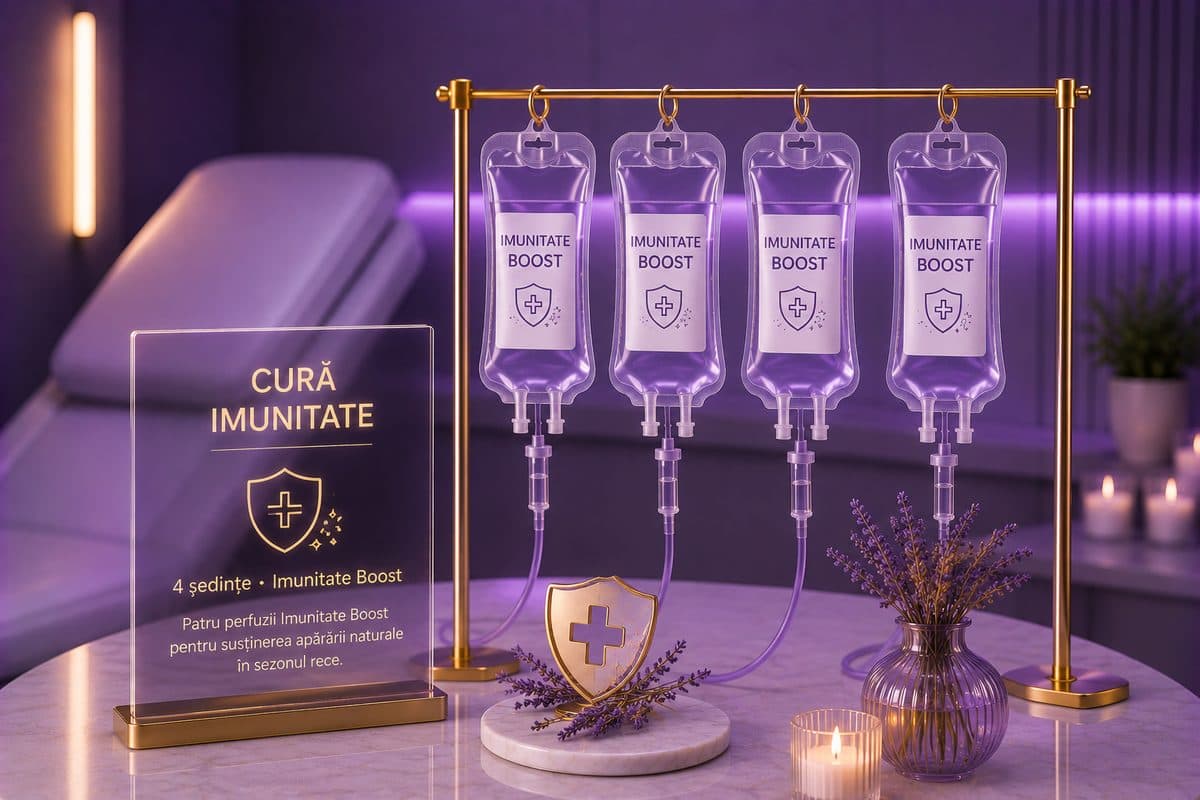
Vitamin C, zinc and vitamin D are needed for the immune system to work normally, and a deficiency weakens the body's defences and increases susceptibility to infection. In people without a deficiency, supplementation has modest effects: vitamin C taken regularly did not reduce the number of colds in the general population, zinc did not prevent them, and vitamin D reduced the risk of respiratory infections only slightly.
The article goes through each nutrient, with the figures from the large analyses, then explains when a blood test makes sense and what an infusion can — and cannot — do.
Why these nutrients matter
The US National Institutes of Health (NIH), through its Office of Dietary Supplements, sums up the consensus as follows: an adequate intake of vitamins A, C, D and E, selenium and zinc is important for immune function, and clinical deficiencies of these nutrients weaken immunity and can increase susceptibility to infection.
Vitamin C, for example, helps maintain the integrity of epithelial barriers and contributes to the proliferation of B and T lymphocytes and to phagocytosis. A deficiency impairs immune function.
The key point comes straight after: the fact that a deficiency does harm does not mean that a surplus helps. That has been tested separately, and the results are more modest.
Vitamin C and the common cold: what Cochrane found
The most cited analysis is the 2013 Cochrane review by Hemilä and Chalker, which included only placebo-controlled trials with doses of at least 0.2 g a day.
- Prevention in the general population: in trials with 10,708 participants, vitamin C taken daily did not significantly reduce the risk of catching a cold (relative risk 0.97).
- Intense physical exertion: in marathon runners, skiers and soldiers on sub-arctic exercises — 598 participants, in five trials — the risk of a cold was roughly halved (relative risk 0.48).
- Duration of the cold: in those who took it regularly, colds lasted 8% less in adults and 14% less in children.
- Taken only after symptoms started: no consistent effect on duration or severity was seen.
The authors' conclusion: routine supplementation in the general population is not justified, although it may be useful for people exposed to short periods of severe physical exertion.
The NIH notes another relevant point: the effects of supplementation may vary with each person's vitamin C level, and some data suggest a greater benefit in those with a low level.
What the intravenous route changes and what it does not
An NIH pharmacokinetic study published in 2004 showed that vitamin C taken by mouth produces blood concentrations that the body controls tightly, while intravenous administration reaches much higher concentrations, rising further as the dose increases. The mechanism is explained in detail in the article about vitamin C ampoules and infusion.
What does not follow from this: that a higher concentration brings a greater clinical benefit. The largest randomised trial of intravenous vitamin C, LOVIT, published in 2022, included 872 adults with sepsis in intensive care. The group that received vitamin C had a higher, not lower, risk of death or persistent organ dysfunction at 28 days compared with placebo.
This is a very different context from a wellness drip and says nothing about the risk in a healthy person. It does show, however, that “more, straight into the vein” does not automatically translate into “better”.
Zinc: not for prevention, possibly for duration
The 2024 Cochrane review analysed 34 trials, with 8,526 participants, that tested zinc alone against placebo.
- Prevention: zinc may have little or no effect on the risk of catching a cold (low-certainty evidence).
- Treatment: taken during a cold, it may shorten its duration, but the certainty of the evidence is low and the results of the trials varied widely.
- Adverse effects: used as a treatment, zinc probably increased the risk of mild adverse effects; among those tracked in the trials were an unpleasant taste and digestive upset.
Half of the trials used lozenges, and the rest tablets, syrups or intranasal forms. The results cannot be transferred to zinc given by infusion.
Zinc also has a clear safety limit. Doses of 50 mg or more, taken for weeks on end, can inhibit copper absorption and can even reduce immune function. The tolerable upper intake level set for adults is 40 mg a day.
Vitamin D: a small effect, linked to daily doses
A meta-analysis published in 2021 in The Lancet Diabetes & Endocrinology pooled 43 randomised trials, with data for 48,488 participants. Vitamin D supplementation reduced the risk of having at least one acute respiratory infection, but the reduction was small: 61.3% compared with 62.3% in the placebo group.
Protection was associated with daily doses of 400–1,000 IU, with durations of up to 12 months, and with an age of 1–16 years at enrolment. Supplementation was safe.
The practical consequence: high-dose injectable vitamin D is not a way to prevent colds. It is a way to correct a confirmed deficiency, covered in detail in the article about injectable vitamin D3. Unlike vitamin C, excess vitamin D can cause hypercalcaemia.
When a deficiency should be confirmed
Targeted supplementation makes sense when there is a deficiency. For each of the three nutrients, the blood test has its own particularities:
| Nutrient | Test used | What to know |
|---|---|---|
| Vitamin D | 25-OH vitamin D | the main indicator of status; done before a high dose |
| Zinc | serum or plasma zinc | influenced by age, sex and time of sampling; does not always reflect intake |
| Vitamin C | plasma vitamin C | the body tightly controls its blood level |
Tests are useful mainly in at-risk groups. For zinc: digestive conditions, bariatric surgery, a vegetarian or vegan diet, chronic alcohol use. For vitamin C: smokers, people with a very limited diet and those with malabsorption.
Results are interpreted at a consultation, not on your own and not from a message.
What an infusion does not do
- It does not prevent infections and does not replace vaccination.
- It does not treat a cold, flu or any other infection. If you are ill right now, with a fever, the right place to go is your GP (family doctor).
- It does not make up for lack of sleep or a long-term unbalanced diet.
What we offer at Synerva
The protocols in this category are on the immunity IV drips page:
- Immunity Boost — vitamin C, B complex, minerals and trace elements, 60 minutes, 600 RON;
- High-dose vitamin C 5000 mg — 30 minutes, 300 RON, details on the injectable vitamin C page;
- Glutathione + vitamin C — 45 minutes, 450 RON;
- Minerals & trace elements — includes zinc, 30 minutes, 250 RON;
- Immunity course — 4 Immunity Boost sessions, 1990 RON, compared with 2400 RON separately.
Injectable vitamin D — 100,000 IU at 200 RON, 300,000 IU at 250 RON — is given only after a medical assessment, based on the measured level. Details on the vitamin D page.
The medical assessment and sterile materials are included in the price. For a home visit a travel fee is added: 100 RON in Bucharest, free for orders of 600 RON or more, and 150 RON in Ilfov, free for orders of 900 RON or more. If at the assessment we do not see a reason for an infusion, we tell you.
Sources
For information only. It does not replace a medical consultation and does not interpret test results.
Frequently asked questions
- Does vitamin C prevent colds?
- In the general population, no. The 2013 Cochrane review found that vitamin C taken daily did not significantly reduce the risk of catching a cold (relative risk 0.97). The exception was people under intense physical exertion, such as marathon runners, where the risk was roughly halved. Taken regularly, it shortened colds slightly: by 8% in adults.
- Does zinc help immunity?
- Zinc is needed for immune function, and a deficiency matters. As a supplement for colds, the 2024 Cochrane review found little or no effect for prevention and a possible shortening of duration, with low certainty and more mild adverse effects. High doses taken for a long time can reduce copper absorption.
- Does vitamin D reduce the risk of respiratory infections?
- Slightly. A 2021 meta-analysis with more than 48,000 participants found a small reduction in risk, associated with daily doses of 400–1,000 IU. High-dose injectable vitamin D is used to correct a confirmed deficiency, not to prevent colds.
- Is vitamin C better by infusion than as tablets?
- It reaches much higher blood concentrations, because it bypasses the limit on intestinal absorption. That does not automatically mean a greater clinical benefit. In the LOVIT trial, in patients with sepsis in intensive care, intravenous vitamin C was associated with a higher risk of death or organ dysfunction than placebo.
- What tests should I have beforehand?
- It depends on the nutrient and on your risk. For vitamin D, the reference test is 25-OH vitamin D, and it is done before a high dose. Serum zinc has limits of interpretation. Which tests make sense for you is decided at the consultation.
- Can I have an immunity drip when I already have a cold?
- An infusion does not treat an infection. If you have a fever or symptoms of infection, the right place to go is your GP (family doctor). Immunity protocols are discussed at the assessment, when you are well.
- How much do immunity drips cost?
- Immunity Boost costs 600 RON, High-dose vitamin C 5000 mg 300 RON, and the Immunity course, 4 Immunity Boost sessions, 1990 RON. The medical assessment is included. For a home visit, add 100 RON in Bucharest (free from 600 RON) or 150 RON in Ilfov (free from 900 RON).
More in Guides
- What is intravenous therapy: medical uses, how a session works and what risks it carries
Intravenous therapy is one of the most routine procedures in hospital, but wellness vitamin drips are a different use, with weaker evidence and the same procedural risks. How a session works, what complications can occur and who needs to be careful.
- Do vitamin IV drips actually work? An honest look at the evidence
It depends what for. Injectable vitamins are standard treatment in some deficiencies and absorption disorders, but for energy or immunity in healthy people the evidence is weak. What the studies show, how much placebo matters and what questions to ask a clinic before you pay.
- How often can you have vitamin IV drips — frequency, blood tests and the risk of excess
There is no frequency that suits everyone. The pace depends on the goal and, for vitamins that accumulate or for iron, on a confirmed deficiency. The documented risks of “more often”, what the studies show about repeated infusions and how courses are put together.
- How an IV drip at home works — step by step, costs and what is not done at home
What happens from booking until the nurse leaves with the medical waste, what you need to prepare at home, which protocols are not given at home and why, what the travel fee is and where we go in Bucharest and Ilfov.
SYNERVA services related to this article
Thinking of trying it?
We start with a medical assessment — we tell you which protocol makes sense for you and which doesn't. Published prices, no surprises.
Book an assessment